MARQUETRY, DEFINED
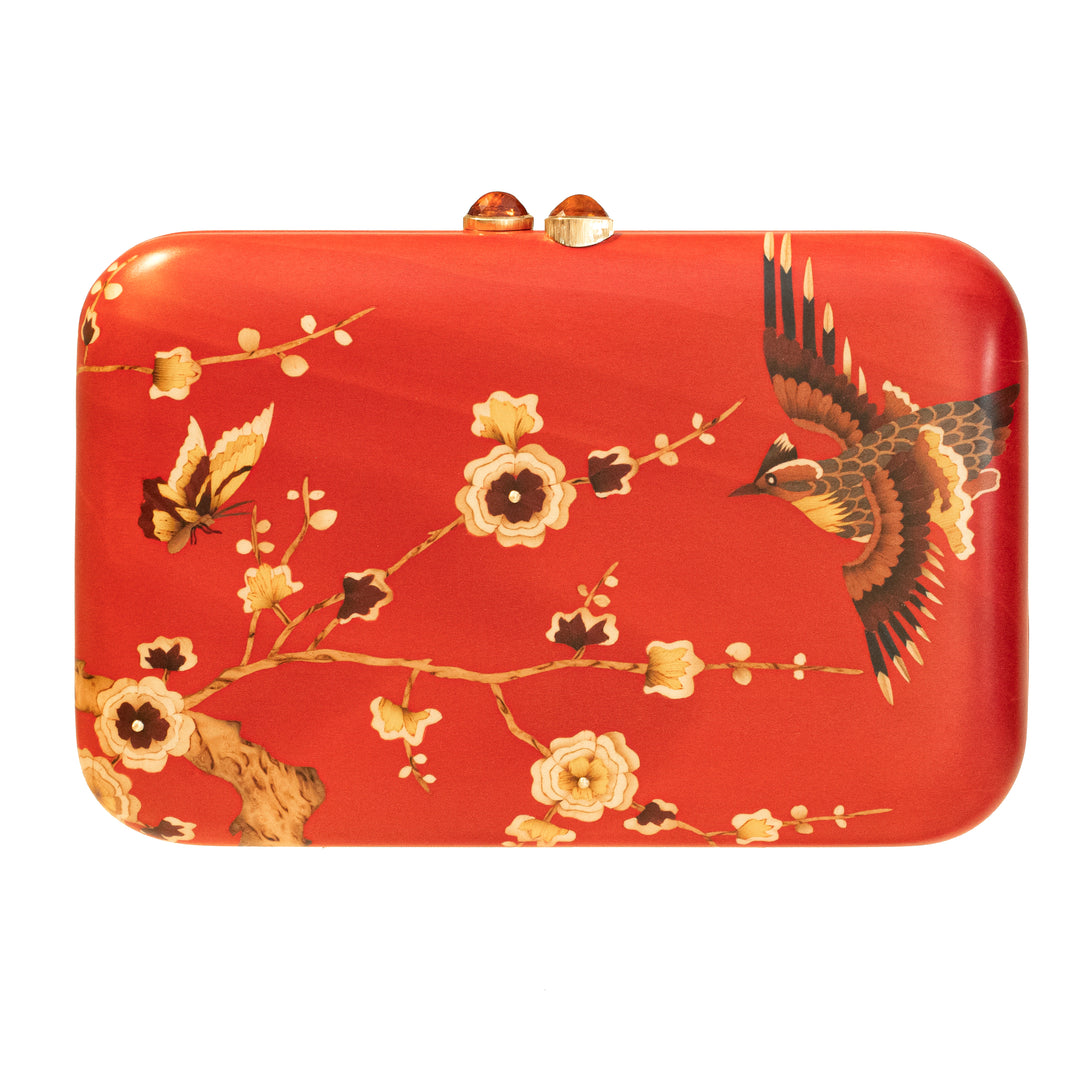
Marquetry — the highly prized, lavishly ornamental decorative art — has roots in ancient Italian marble inlay, then appropriated by cabinet makers in Antwerp in the early 16th Century who used wood in place of stone. Silvia's Marquetry Collection began to take shape after a trip to Acre, Brazil’s Westernmost state, where Silvia encountered the skilled craftsmen who master the art of marquetry using native wood
"Wood has been an important material in my work. The marquetry technique lends itself very well for an endless variety of intricate and detailed motifs, which gives a lot of creative freedom. Wood is also very lightweight, which makes it ideal for jewelry”. - SILVIA FURMANOVICH
Marquetry is actually a painstaking process of assembling hand-cut wood veneer shapes created from found objects in the forest. Artisans, looking for raw materials such as fallen tree branches or bark, collect local specimens — in this case, colored wood including Muirapiranga (red), Tatajuba (yellow), Louro Abacate (Green), Roxinho (purple) and Azul Carvalho (blue) — that they reclaim, thereby making the process sustainable. A proprietary system of washing and soaking the wood in water and minerals, enhancing its existing color naturally, allows for a variety of hues that is at once earthy and bold.